Raw river water is not drinking water. Here’s what happens in between.
Water from springs and boreholes is already filtered by the ground it has passed through, so it needs disinfection only.
Surface water needs the full process. River water carries fine clay that gives it a brown colour after rain, along with bacteria from the surrounding environment. Both have to go.
Follow the water left to right. It arrives murky and leaves clear.
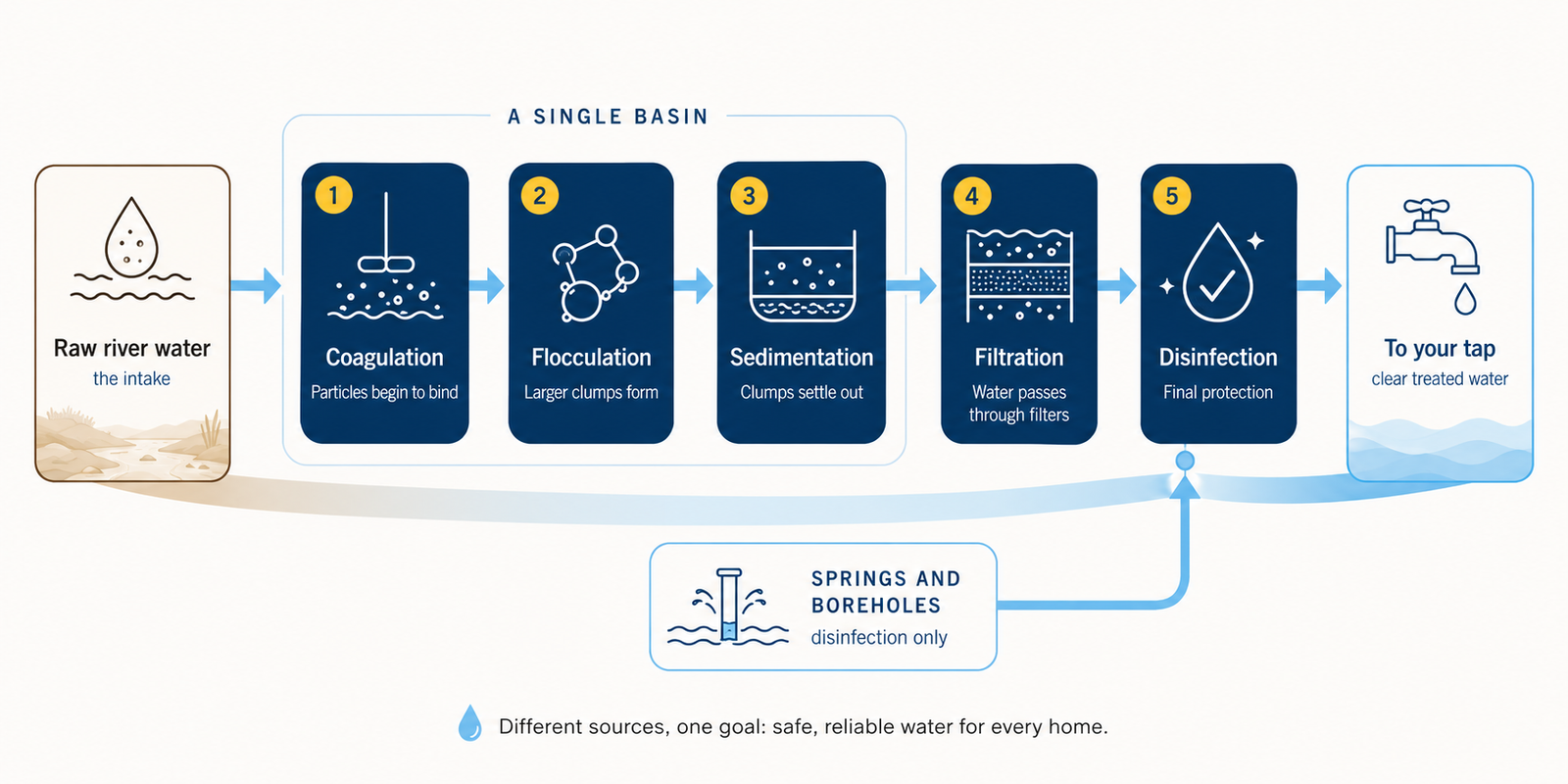
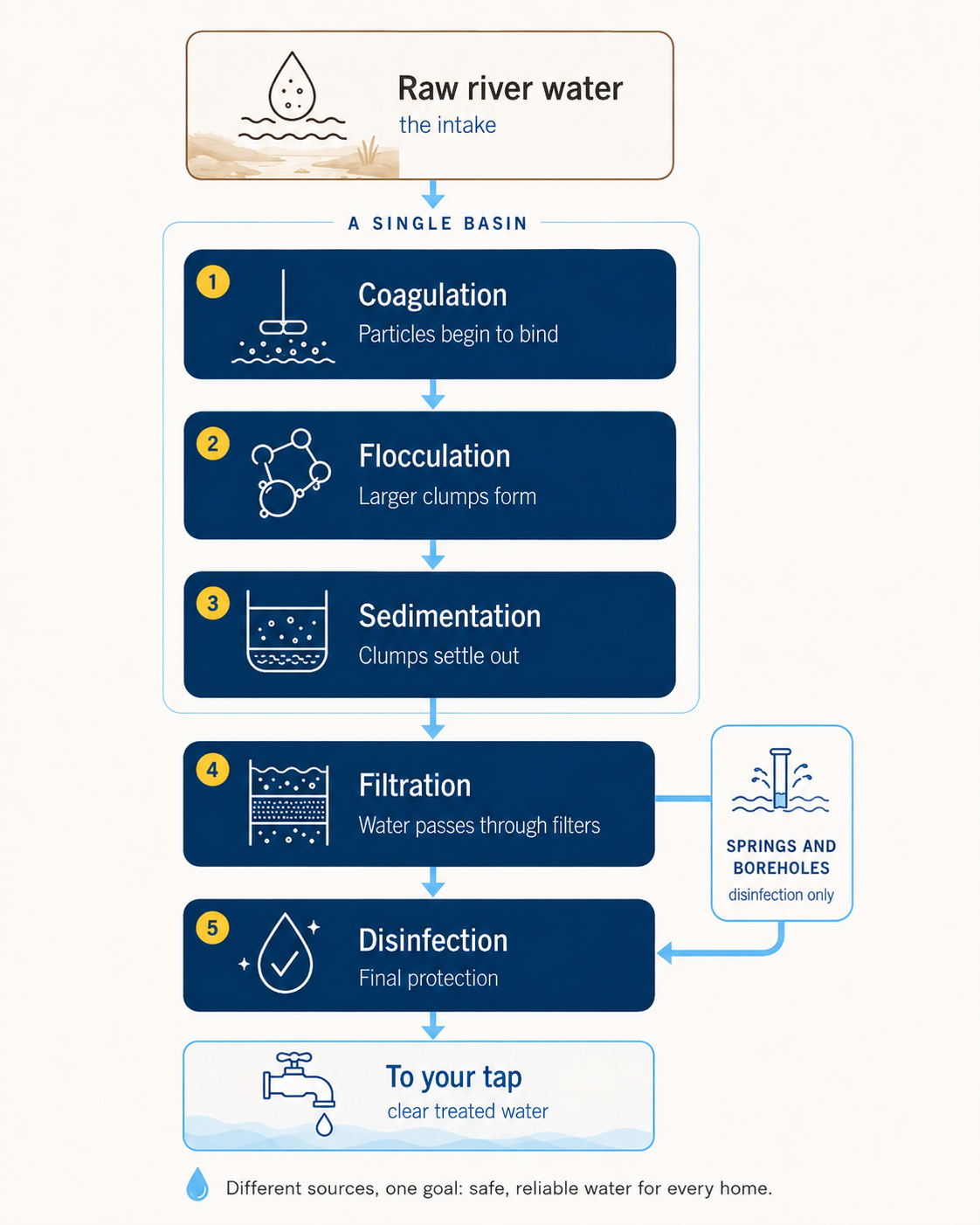
We add a coagulant to the raw water and mix it fast. The fine clay particles are too light to settle on their own, and the coagulant makes them stick to each other.
A gentle stir brings those particles together into larger clumps, heavy enough to sink.
The clumps settle out under their own weight and are drawn off. These first three stages happen in a single basin.
The water passes down through a bed of sand. Most of what's left, including the great majority of remaining bacteria, is removed here. It isn't only a physical strainer - biological and chemical processes in the top few inches of the sand bed do much of the work.
Chlorine is added to the filtered water. It deals with any bacteria still present and stays in the water as it travels, protecting it all the way to your tap.
From there the water is pumped into transmission mains, into service reservoirs, and out through the distribution network to your meter.